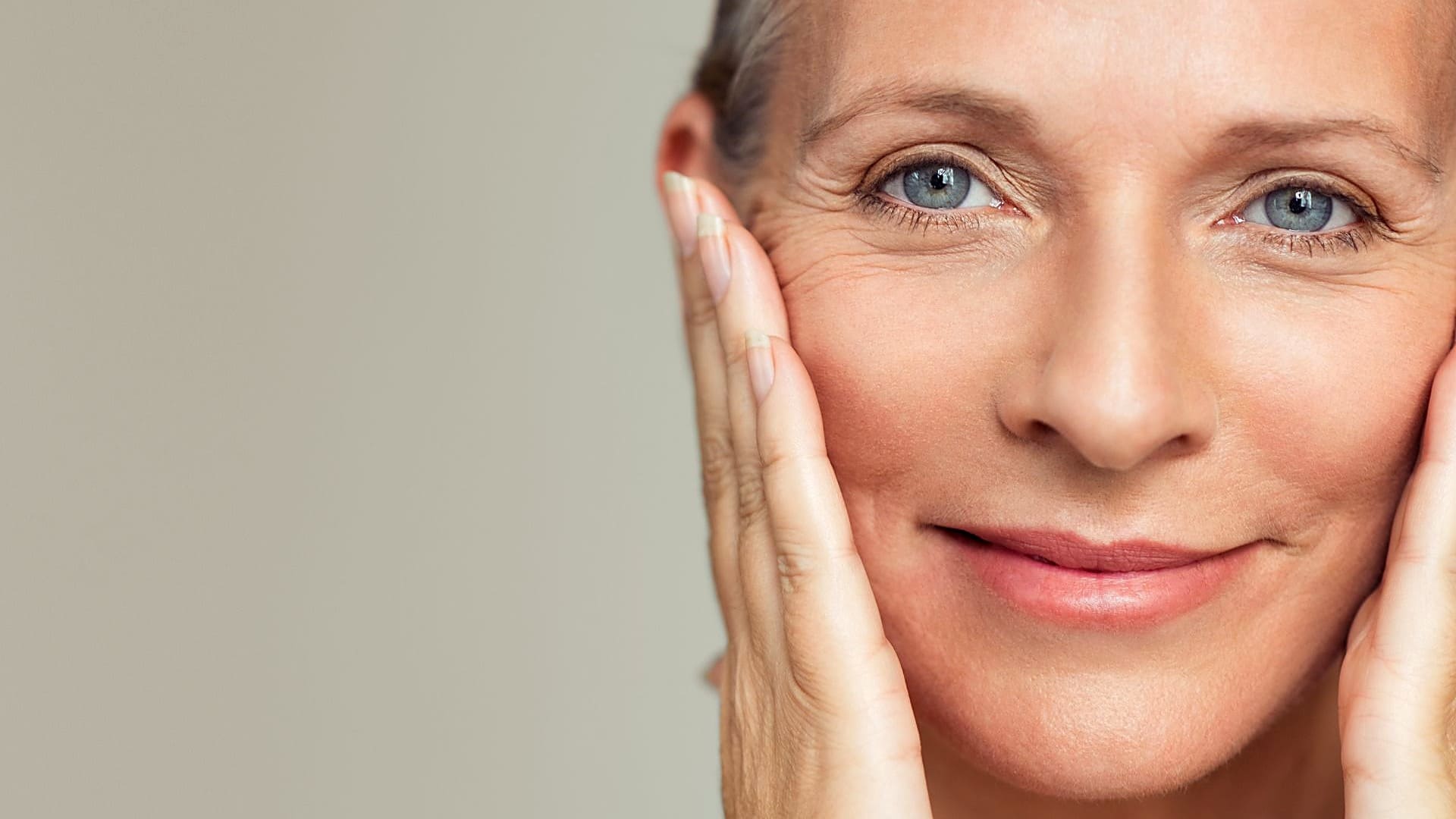
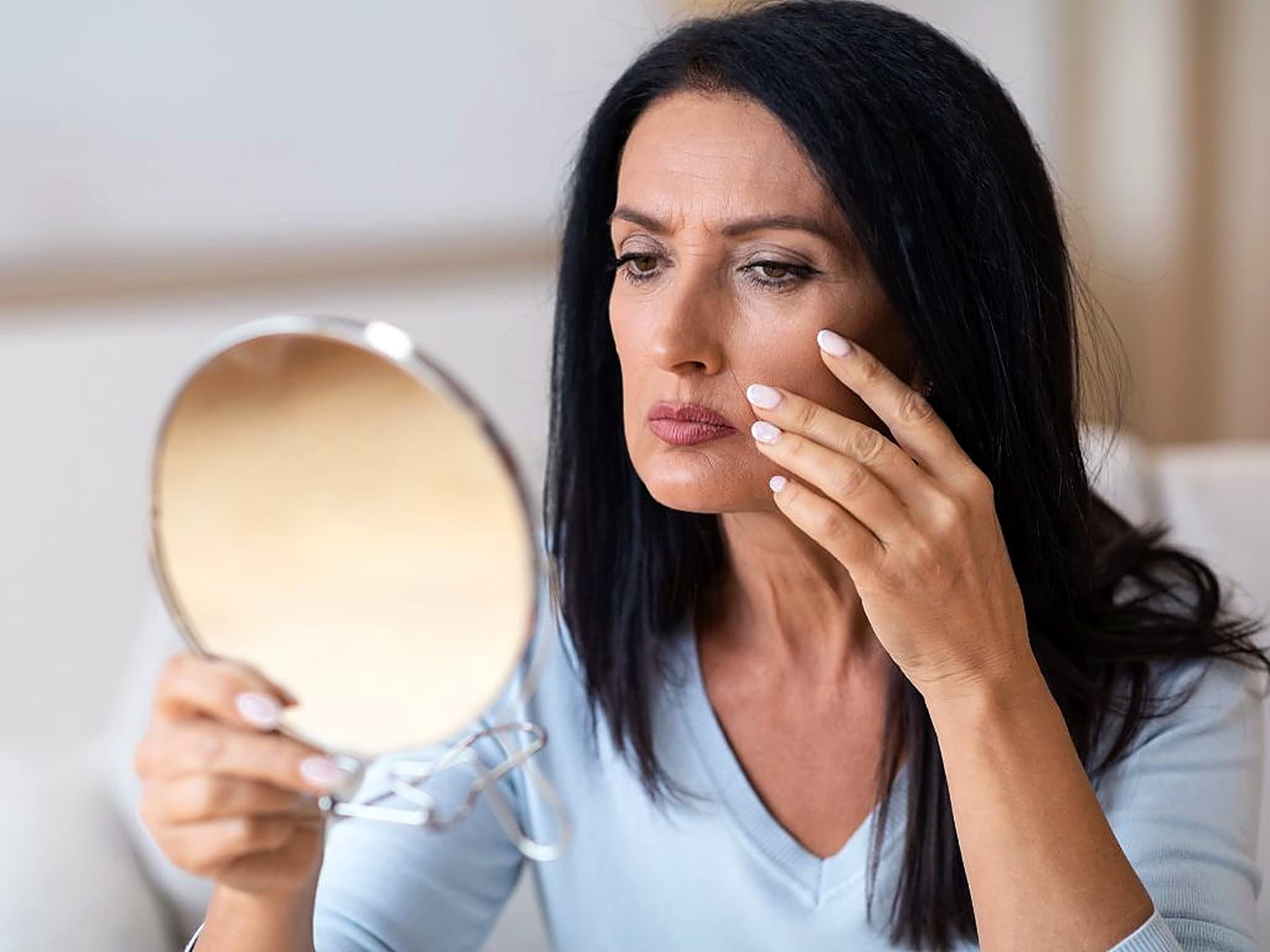
There are periods in a woman’s life when the mirror seems to change a little faster than she is used to. The skin looks drier, its familiar glow is not quite the same, the lines around the eyes linger longer, and the facial contour begins to look different.
And somewhere around that point, the same thought often appears: “How did I change so much in such a short time?”
It is not an exaggeration to feel this way. Menopause is an important biological transition, and the decline in estrogen affects far more than the menstrual cycle or hot flashes. It influences many tissues throughout the body, including the skin.
Of course, no two women change in exactly the same way. Genetics, sun exposure, smoking, weight fluctuations, daily skincare, and the individual anatomy of the face all continue to play an important role. Estrogen, however, adds another factor, and for many women it can make certain changes more noticeable over a shorter period of time.
Before discussing injectable treatments, it is worth starting with a more important question:
What has actually changed in the face?
Why can the change feel so sudden?
The skin does not simply age along with the rest of the body. It has estrogen receptors and responds to hormonal changes.
Estrogen is involved in the activity of fibroblasts, the cells associated with the production of collagen and other essential components of the extracellular matrix. It also influences skin hydration, elasticity, and thickness.
As estrogen levels decline, these changes gradually begin to become visible in the skin as well.
It has been estimated that a woman’s skin may lose approximately 30% of its collagen during the first five years of menopause, after which the loss continues at a slower rate of around 2% per year.
Earlier studies have also estimated a decrease in skin thickness of approximately 1.13% for each postmenopausal year. These figures are population averages rather than an exact prediction of what will happen to every woman.
This helps explain why the transition can feel more sudden than the usual gradual changes associated with time.
The first thing you notice is not always a new wrinkle
Often, the change is much more subtle and diffuse.
The skin may begin to look drier, thinner, or less luminous. It can lose some of its softness and appear more “tired,” even when the overall structure of the face has not changed dramatically.
And then something interesting happens: fine lines become more visible without necessarily becoming proportionally deeper.
Skin that is less hydrated and thinner reflects light differently, making small surface creases stand out more clearly.
This matters when choosing a treatment. Skin that has mainly lost hydration and freshness has very different needs from a face that has lost volume or structural support.
What happens to facial contours?
Here, it is worth clarifying a fairly common misconception.
Not every facial change is caused by declining estrogen levels.
Facial aging takes place at several levels at the same time. Over the years, the distribution of subcutaneous fat changes, bone support gradually evolves, ligaments and soft tissues change, and the skin loses some of its elasticity and density.
This is why changes can become visible in the cheekbones, temples, around the mouth, or along the jawline.
Menopause is added to these ongoing processes. During the same period in which the skin becomes drier and thinner, changes in facial volume or proportions that had already begun earlier may also become more noticeable.
This is why there is no single injectable treatment for a “menopausal face.”
Myth: “After menopause, I need more hyaluronic acid”
Not necessarily.
If volume or structural support has been lost in certain areas, hyaluronic acid filler can help restore some balance, support the tissues, and improve facial contours.
Modern treatment planning, however, is not based on adding volume everywhere a line or shadow appears.
The lines that run from the sides of the nose toward the corners of the mouth, for example, can become more pronounced because of changes that have occurred higher up in the midface. In this situation, assessing the overall facial proportions is more important than treating only the most visible line in isolation.
The literature on hyaluronic acid fillers supports this more comprehensive approach to volume restoration and facial contouring. The goal does not need to be a “fuller” face. Often, what we are really looking for is better balance and a more rested appearance.
When lines are mainly related to facial expression
Wrinkles on the forehead, between the eyebrows, and around the eyes are largely caused by repeated movement of the facial muscles.
Botox treatment temporarily reduces the activity of selected muscles, helping to soften dynamic wrinkles, meaning the lines that appear or become more pronounced when we smile, frown, or raise the eyebrows.
As the skin loses some of its elasticity and density after menopause, a line that once disappeared when the face relaxed may begin to remain visible for longer.
Botulinum toxin can then form an important part of an overall facial rejuvenation plan, particularly when expression lines are among the features that concern the woman most.
The face does not need to look “frozen” for the treatment to work. Proper planning aims to preserve natural expression while helping the eye area or upper third of the face look more rested.
When volume or structural support has been lost
Hyaluronic Acid has a different role from botulinum toxin.
It can be used in selected areas to restore some of the lost volume, support the tissues, and improve facial proportions.
The cheekbones, temples, chin, and jawline are areas where age related changes can noticeably affect the overall appearance of the face.
Correct placement of the product can provide support and improve contour without altering the individual facial features.
A natural result is not determined by how much product is used, but by where, why, and how it is used.
When the skin has lost hydration and freshness
For many women during menopause, the main concern is not that the shape of the face has changed. It is that the skin no longer has the same vitality.
This is where Skin Boosters follow a different philosophy from traditional fillers.
These are injectable hyaluronic acid treatments that primarily target skin quality and can help improve hydration, radiance, texture, and the overall appearance of fresher skin.
A systematic review of the available clinical studies found improvements in parameters such as hydration, firmness, radiance, texture, and elasticity following injectable hyaluronic acid treatments designed to improve skin quality.
This option can be particularly interesting for women who want to improve the appearance of their skin without changing the proportions of the face. Treatments such as Profhilo Skin Booster and Ejal 40 follow a similar approach and are selected according to skin quality and the individual treatment plan.
Poly L Lactic Acid: when we want the result to build gradually
Poly L Lactic Acid belongs to the category of collagen biostimulators and works differently from a conventional filler.
After treatment, it triggers a gradual biological response in the tissues that is associated with new collagen production.
For this reason, the final result is not achieved immediately after the session. It develops progressively as neocollagenesis takes place.
In faces where the main concern is a more diffuse loss of density, firmness, and support, poly L lactic acid can offer an interesting treatment approach that does not focus only on a single wrinkle. Recent systematic reviews have reported improvements in parameters such as elasticity, wrinkles, volume, and skin thickness following PLLA treatments, although research is continuing to define the most effective protocols with greater precision.
PRP: using biological factors from the body itself
Autologous PRP Mesotherapy uses plasma obtained from the woman’s own blood and enriched with platelets and growth factors.
These factors naturally participate in tissue repair and regenerative processes.
In aesthetic dermatology, PRP is used with the aim of improving characteristics such as texture, radiance, and overall skin quality.
A recent systematic review of clinical studies reported improvements in wrinkles and skin texture in a number of the available studies, as well as findings associated with increased dermal density. At the same time, broader reviews note that PRP protocols vary considerably between studies, which helps explain why the results are not completely uniform.
Because the material is autologous, it represents a distinctive option for women who are interested in an approach based on the biology of their own tissues.
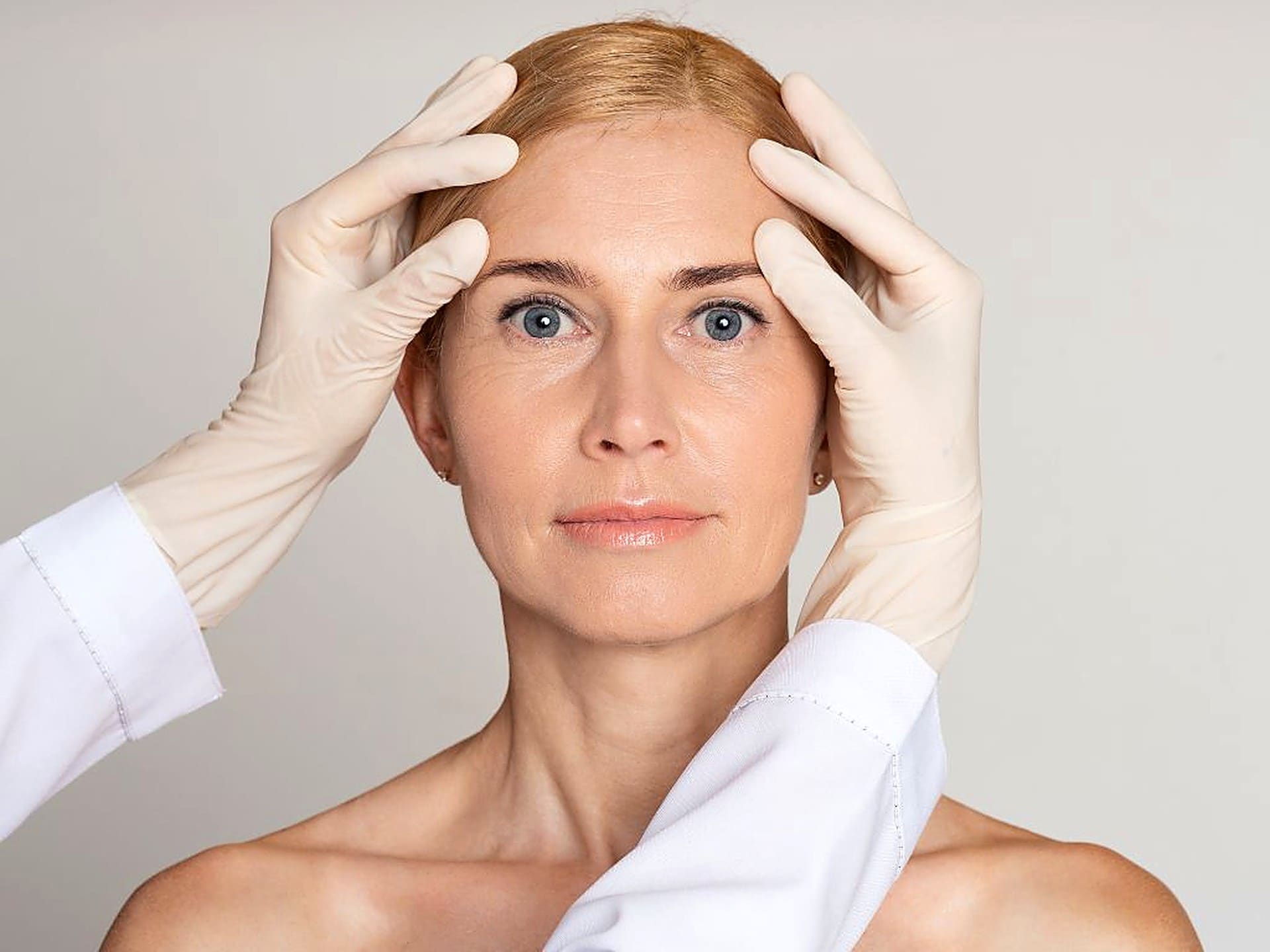
What changes in the planning of an injectable treatment after menopause?
This may be one of the most important points to remember.
Skin that has become thinner, drier, or less elastic needs to be assessed differently from denser skin at a younger age.
Tissue thickness, elasticity, volume loss, muscle activity, anatomy, and the treatment area all influence the choice of product, quantity, and technique.
This becomes even more important in areas where the skin is naturally thin, such as around the eyes.
Two women aged 55 may be at exactly the same hormonal stage and still require completely different approaches.
For one woman, reduced hydration may be the main concern. For another, changes in volume may be more noticeable. Someone else may mainly be concerned about expression lines or an overall loss of firmness.
Age gives us information. The face itself, however, determines the treatment plan.
Before injectables, the basics still matter
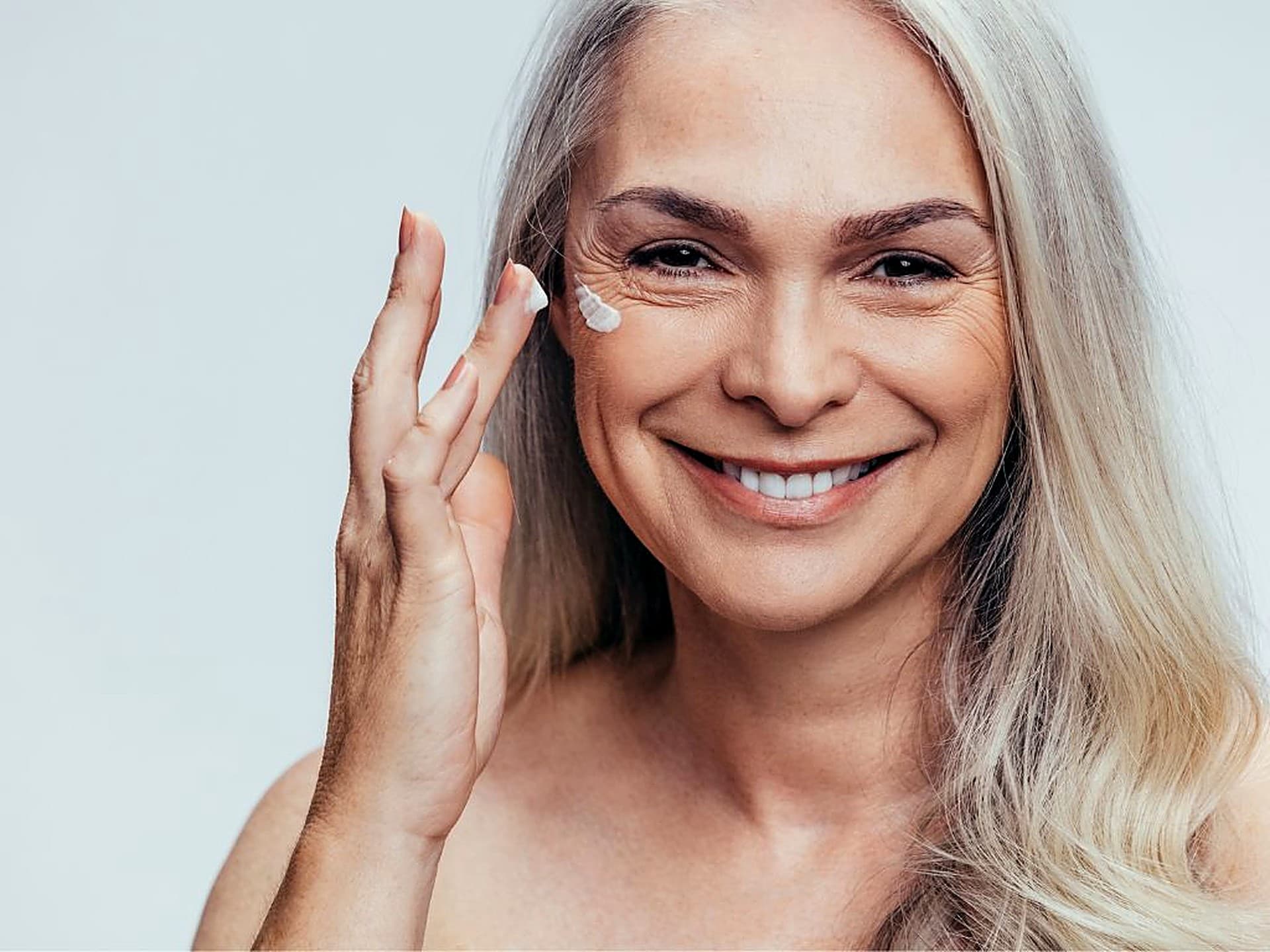
No matter how advanced modern treatments become, daily skincare continues to play a major role.
Consistent sun protection helps protect the skin from the additional burden of photoaging, proper hydration supports a skin barrier that may have become more sensitive, and active ingredients such as retinoids, when appropriate and used correctly, can help improve texture and fine lines. The American Academy of Dermatology places particular emphasis on both sun protection and ingredients such as retinol during menopause.
Injectable treatments are not intended to replace this foundation. They complement daily care when there are changes that skincare products alone cannot adequately address.
If estrogen affects the skin, why not simply take hormones?
It is a completely reasonable question, but it concerns a different medical decision.
Menopausal hormone therapy has specific indications and is assessed according to symptoms, personal medical history, age, and the woman’s overall health profile.
It is not started solely for cosmetic reasons or with the single aim of maintaining a younger looking appearance of the skin.
Aesthetic injectable treatments, on the other hand, target specific facial characteristics, such as expression lines, volume loss, skin quality, or reduced firmness.
These are therefore two separate discussions and should not be confused.
You do not need to look different to look better
For many women, the greatest hesitation about injectable treatments is not the needle. It is the fear of looking in the mirror afterwards and seeing someone else.
“I don’t want to change. I just want to look a little more rested, a little fresher, a little more like how I feel.”
And this may be the most meaningful starting point for any aesthetic treatment.
Not everything needs to be corrected. The approach can be subtle and gradual, depending on what genuinely concerns each woman.
Menopause is a shared biological experience, not a shared aesthetic facial type. The changes that accompany it do not appear in the same way on every face, which is why the aesthetic approach needs to remain personal. At Cosmetic Derma Medicine, the choice of the most appropriate injectable treatment is made after an individualized medical assessment of skin quality, facial anatomy, and the changes that have already occurred. Because a truly beautiful result does not need to make you look younger at any cost. It needs to respect your face, suit the stage of life you are in, and allow you to still recognize yourself in the mirror.