At 25, anti-aging treatments probably aren’t on your mind. And at 29, on most days, you likely still see much the same face you had a few years ago when you look in the mirror. Somewhere along the way, though, little details may start to catch your attention. A fine line across your forehead takes a little longer to fade after you change your expression. Your frown lines look stronger when you’re tired, the skin around your eyes doesn’t always look as rested, or summer has left your complexion with a few dark spots and a less even texture. At the same time, you might have something in mind that has nothing to do with aging: lips you’ve always wanted to look a little more defined, a chin you wish balanced your profile better, or acne scars you’re tired of covering up.
Meanwhile, aesthetic medicine has become part of what we see every day. Baby Botox, preventive Botox, fillers, Skin Boosters, polynucleotides, lasers and collagen banking appear constantly in our feeds, often with the message that ‘the earlier you start, the better.’ Curiosity can quickly turn into a nagging question: is there something I should already be doing? But being 25–30 isn’t a deadline for getting treatments. At this age, most changes are still subtle, which leaves room to focus on the details—without going overboard or changing what naturally makes your face yours.
When Does a Line Stop Being Just Part of Your Expression?
At a younger age, the skin generally has greater elasticity and can recover more readily after movement. You raise your eyebrows, frown or laugh, and the fine folds that appear with those expressions fade when your muscles relax. These are dynamic lines, and they are a natural part of an expressive face.
With those movements repeated over time, however, alongside gradual changes in skin quality and elasticity, some lines may remain faintly visible even when your face is at rest. Noticing that a line once seen only when you frowned is still there after your forehead relaxes tells you far more than a blanket rule such as ‘Botox after 30.’
We don’t all use our facial muscles with the same intensity, either. Some people have particularly active frown muscles, others constantly raise their eyebrows when speaking, while others develop very few lines even when they are highly expressive. Anatomy, genetics, sun exposure, skin quality and muscle strength all affect the picture. That’s why two people of exactly the same age may have very different needs.
Preventive Botox and Baby Botox: Two Terms That Don’t Mean Quite the Same Thing
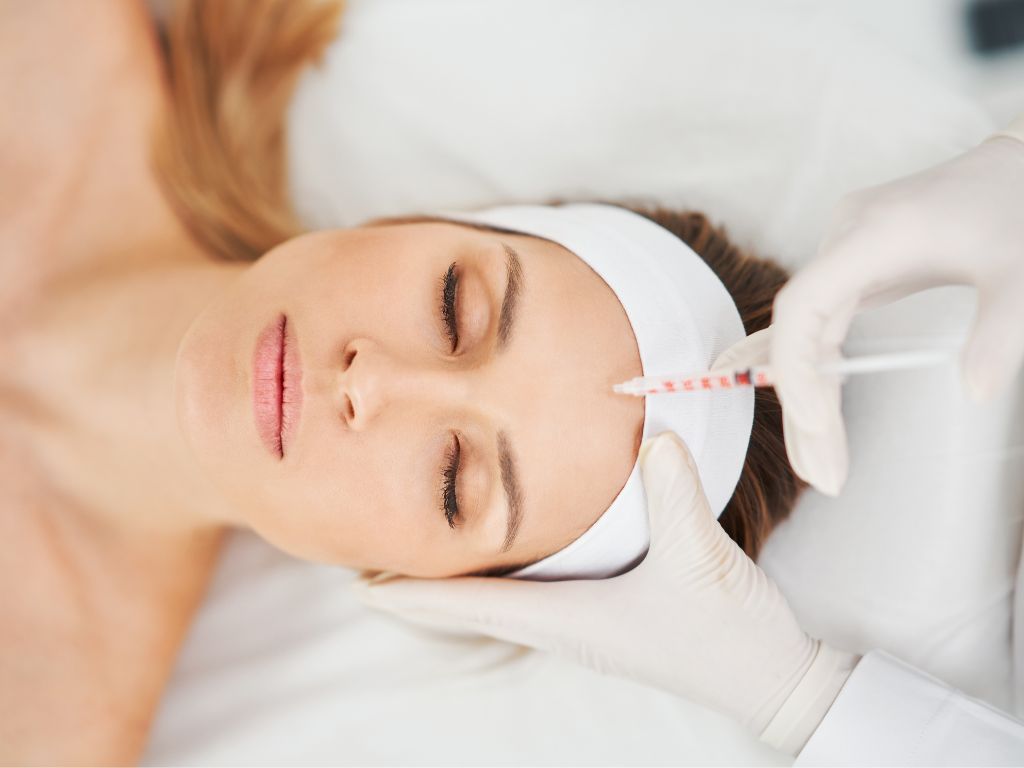
The idea behind preventive Botox is fairly straightforward. When strong muscle movements repeatedly fold the skin in the same place, reducing those contractions may help slow the deepening of a line. The aim is not to erase every trace of expression from a young face. Rather, it is to consider treatment when a dynamic line is beginning to persist even between expressions.
Preventive Botox mainly describes the reason for choosing the treatment. Baby Botox refers more to how it is administered: smaller, carefully placed amounts intended to soften excessive muscle activity while preserving natural movement. The two ideas often overlap between the ages of 25 and 30, but they are not interchangeable.
For someone who notices a frown line beginning to linger, or horizontal forehead lines taking a little longer to disappear, a conservative Botox treatment serves a different purpose than treating wrinkles that have already become deeply established. The key is a subtle intervention. Your forehead can still move, your smile remains your own, and the change is more likely to be perceived as a softer, more rested appearance than an obvious ‘I’ve had Botox’ look.
When the Concern Isn’t Wrinkles but Skin Quality
For many people in their mid-to-late twenties, the first thing they want to improve isn’t a wrinkle or the shape of their face. It’s the appearance of their skin: a brighter, smoother, more hydrated, well-rested complexion. Tiredness, dehydration, acne, pigmentation and uneven texture can be far more noticeable than a fine line.
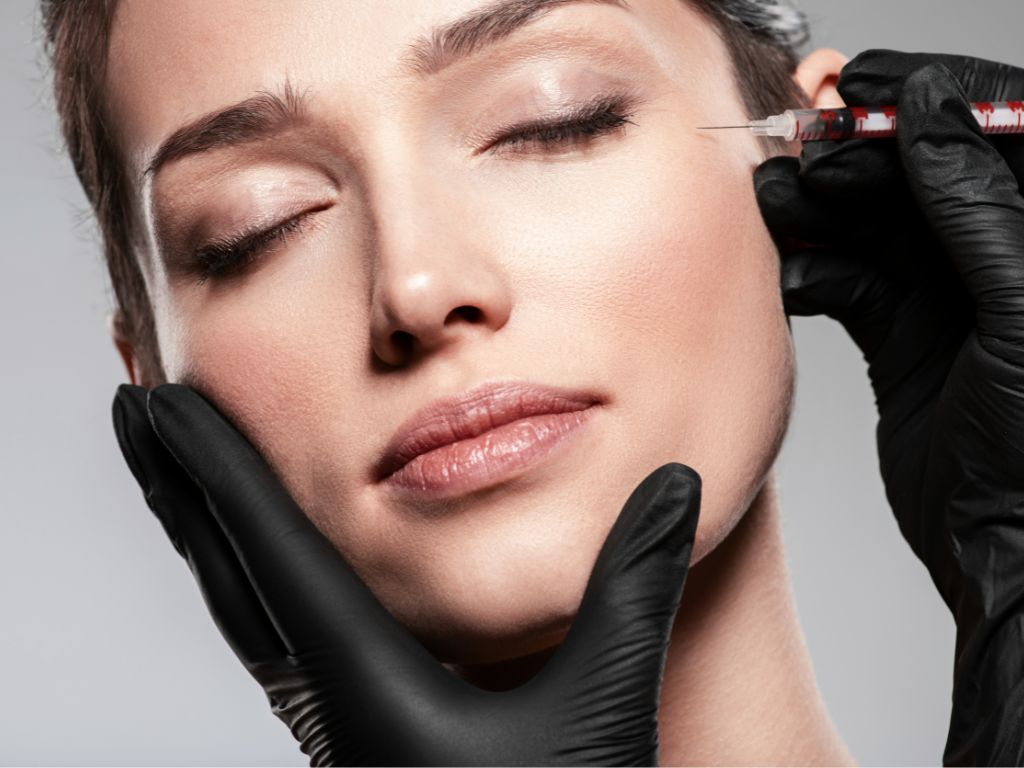
This calls for a completely different treatment plan. Skin Boosters, for example, use hyaluronic acid in a different way from traditional fillers. Rather than aiming to alter facial features or add volume, they are designed to improve hydration, elasticity and overall skin quality. For someone who wants a fresher appearance without changing their facial proportions, that is a very different approach.
Polynucleotides have also attracted considerable interest, particularly for fine lines, skin texture and thinner-skinned areas such as the eye contour. The research behind them is newer than the evidence for more established treatments, but their main focus is on improving tissue quality rather than changing volume.
And when the main concern is acne scarring, enlarged pores, pigmentation or rough skin texture, lasers, chemical peels or other resurfacing treatments may offer the greatest benefit. A face can look noticeably fresher without a single feature being changed.
Fillers at 25–30: More About Proportions, Less About Anti-Aging
Hyaluronic acid often plays a very different role in your twenties than it does later in life. The soft tissues usually retain much of their natural fullness, so the aim is not necessarily to replace volume lost with age. It may be more about the relationship between facial features.
The lips are a good example. Treatment does not automatically mean making them bigger. It might involve refining their outline, addressing a small asymmetry or balancing the upper and lower lip. Similarly, a less prominent chin can affect the entire facial profile, and a subtle enhancement may change the balance between the nose, lips and jawline.
Because the goal is usually not to replace lost volume, even a very small adjustment can sometimes change the relationship between two features. This is why fillers can look exceptionally natural on a younger face when there is a clear objective and a carefully considered treatment plan.
It’s important to distinguish between ‘I want to prevent aging’ and ‘there’s something about my natural features I’ve always wanted to look a little different.’ The second can be a perfectly reasonable concern at 25 without needing to be framed as an anti-aging treatment.
What Is Worth Starting Early?
Some habits really do pay off when you start them young, but most are not especially glamorous. Daily sun protection is at the top of that list. UV damage accumulates for years before we can clearly see it as pigmentation, fine lines or changes in texture. A sensible skincare routine, timely treatment of acne and its marks, and avoiding factors that repeatedly stress the skin create the foundation on which more specialised treatments can make sense.
This is where the term collagen banking, which has become especially popular in recent years, enters the conversation. It doesn’t mean literally storing collagen at 25 to ‘spend’ later. Instead, it describes a preventive approach: protecting the collagen already present and, when appropriate, using treatments that support skin renewal and remodelling. Sun protection, suitable active skincare ingredients and certain resurfacing treatments belong in this discussion much more than the idea that we need to ‘fill’ every area early in anticipation of changes that may happen years later.
And What Can Genuinely Wait?
Starting earlier doesn’t make every treatment more worthwhile just because you have it at 27 rather than 37. Some procedures are designed to address changes that simply haven’t appeared in a young face yet, such as significant skin laxity or more substantial volume loss. There’s little benefit in trying to correct something in advance when it hasn’t happened.
It makes more sense to focus on what is actually there: an expression line beginning to linger, skin that has lost some of its brightness, a feature that has bothered you for years, acne scars or an uneven area you notice every day.
The same goes for how many treatments you choose. Your first appointment doesn’t have to turn into a programme for your forehead, lips, cheekbones and skin all at once. One well-chosen treatment gives you a chance to see how you feel about the change, how your face responds and whether there is anything else you genuinely want to address later. At 25–30, you have time to take things gradually; you don’t have to decide everything at your first appointment.
What Does the Doctor Look at Before Recommending Your First Treatment?
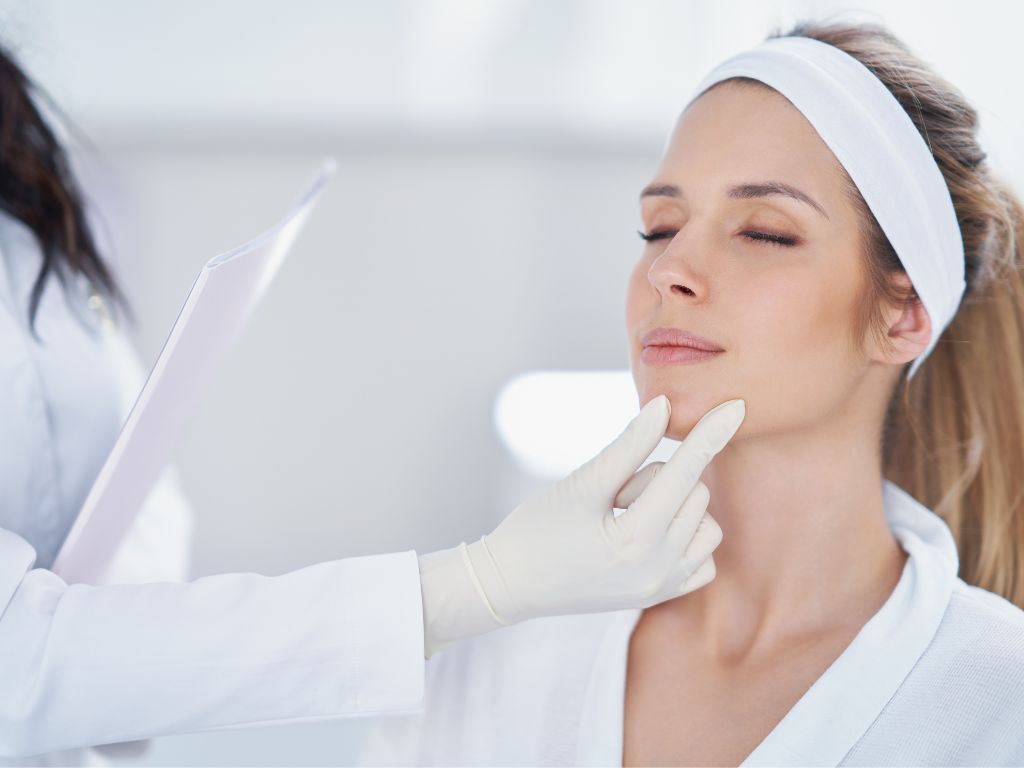
A proper assessment doesn’t begin and end with the wrinkle or feature you point out in the mirror. The doctor looks at your face both at rest and in motion. Your forehead when you raise your eyebrows, your frown muscles when you concentrate, your smile, your profile and the proportions of the lower face all tell a different story from a single still photograph.
Skin quality is assessed too. Is there dehydration, pigmentation, active acne, scarring, sensitivity or fine lines? Have you had injectable treatments before? Is there a feature that genuinely bothers you, or is it something you only recently started noticing because it appears constantly on social media?
Just as important is what you want to keep unchanged. You might love your lips exactly as they are and have no desire to alter them. You might like how expressive your eyebrows are and only want to soften your frown lines slightly. Or perhaps you have no interest in changing your facial proportions at all and simply want to improve your skin quality.
The first step follows from that overall picture. And very often, it is much simpler than you imagined before walking into the clinic.
At 25–30, You Have the Luxury of Focusing on the Details
Perhaps that’s the best part of this age. You’re usually not trying to reverse major changes. You can afford to focus on the details: an expression you’d like to soften, the quality of your skin, a feature you’d like to balance subtly, or something that has bothered you for years and you’ve finally decided to address.
At Cosmetic Derma Medicine, the first conversation can begin right there. Not with ‘which treatment is right for my age?’ but with ‘what would I personally like to improve?’ When the answer is clear, treatment stops being something you do simply because you’re approaching 30 and becomes a choice made for a specific reason.
At 25–30, you’re not trying to get back to a younger version of yourself. You’re already young. But you can begin looking after your face at a stage when even a small change may be enough. And perhaps the best result is precisely that: looking in the mirror and seeing yourself—just a little more rested, a little brighter and more comfortable with your appearance.