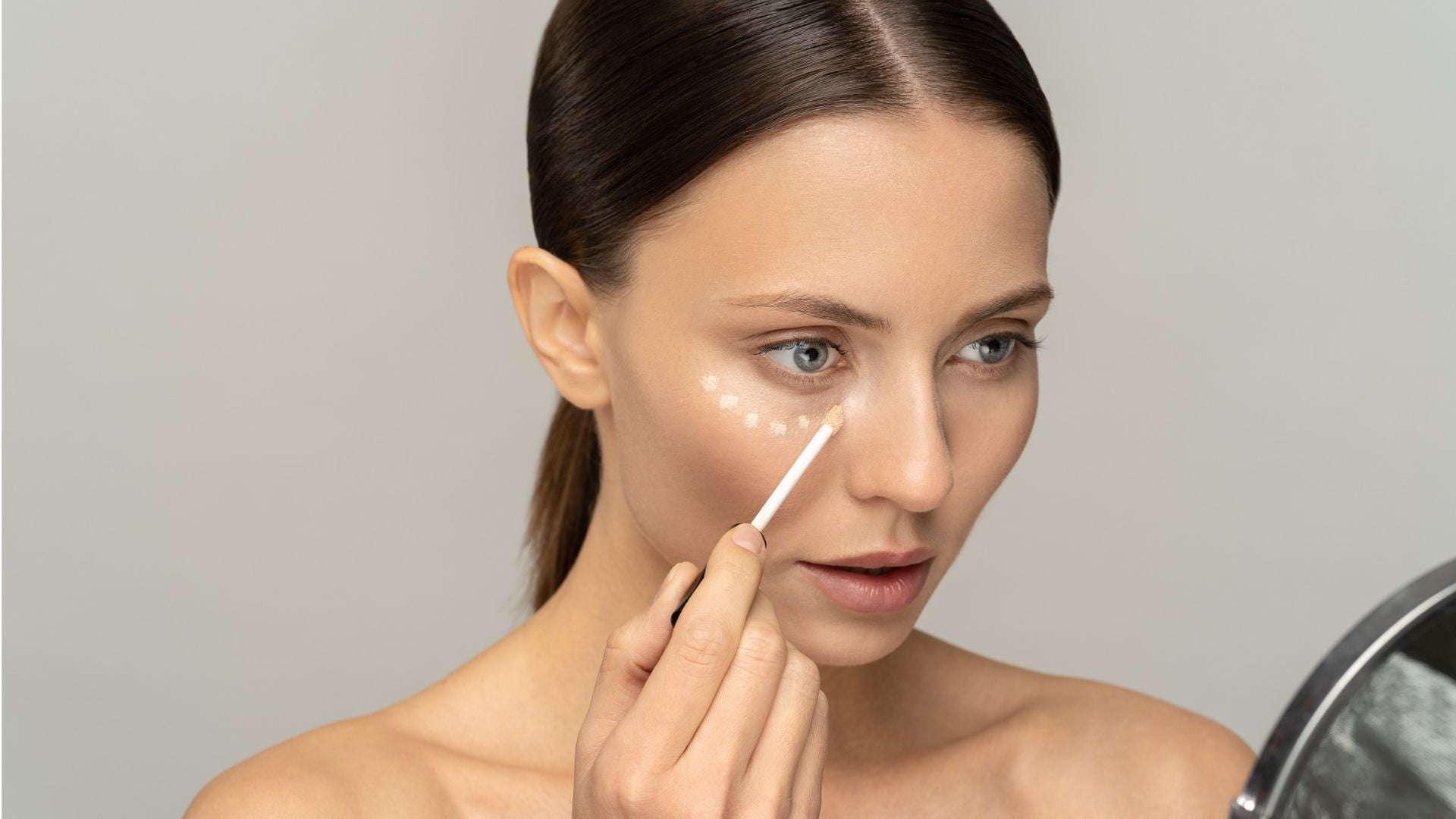
Foundation may look flawless when you apply it in the morning, only for that appearance to change a few hours later. Product has collected around the nose, fine lines appear more pronounced, and dry, uneven patches have emerged on the cheeks. Even after you remove your makeup, your complexion still looks dull.
The first instinct is often to try a different cosmetic product. When the same problem keeps occurring, however, it is worth taking a closer look at the skin beneath the makeup. Dehydrated facial skin may feel rough or tight and make fine lines more visible. And this is not an issue that affects only people with a dry skin type.
A loss of radiance does not always have a single cause. It may be linked to dehydration and an impaired skin barrier, but pigmentation changes, photoaging, and acne scars can also contribute. The right approach therefore begins with identifying which changes are actually affecting the skin.
Dehydrated Facial Skin: What Signs Should You Look For?
Skin dehydration refers to a reduced amount of water in the outermost layer of the skin. When the stratum corneum cannot retain enough moisture, its surface loses some of its flexibility and may develop a rough, uneven texture.
Sometimes the first noticeable change is how the skin feels. It is no longer as soft, and slight flaking or small dry patches may appear. In other cases, the signs are less obvious: the face looks tired, superficial lines stand out, and makeup no longer glides on as it used to.
A tight sensation after cleansing is another common sign. It can occur even in people who experience oiliness around the nose and forehead. Dry air, excessive exfoliation, and harsh cleansers can all compromise the skin barrier.
Not every case of redness or roughness is simply caused by dehydration, though. Persistent burning, intense itching, or inflammation calls for a dermatological assessment, as an underlying skin condition may be present.
Dry or Dehydrated Skin? Two Conditions That Are Not the Same
The words “dry” and “dehydrated” are often used as though they describe exactly the same problem. In reality, dryness and dehydration involve different, although closely related, aspects of skin function.
Dry skin is associated with changes in the skin’s ability to retain moisture and often with insufficient lipids in the stratum corneum. Dehydration mainly describes a lack of water in the skin’s surface layers, which can be aggravated by skincare products or environmental conditions.
As a result, someone with a dry skin type can also be dehydrated, while even an oily face, with increased sebum production, can lack sufficient water in its outermost layer. Sebum production and hydration are not the same thing.
Understanding this distinction matters when choosing a daily skincare routine. More aggressive cleansing does not necessarily solve the combination of oiliness and tightness. In fact, it may increase sensitivity if the skin barrier is already compromised.
Why Does Skin Lose Its Natural Glow?
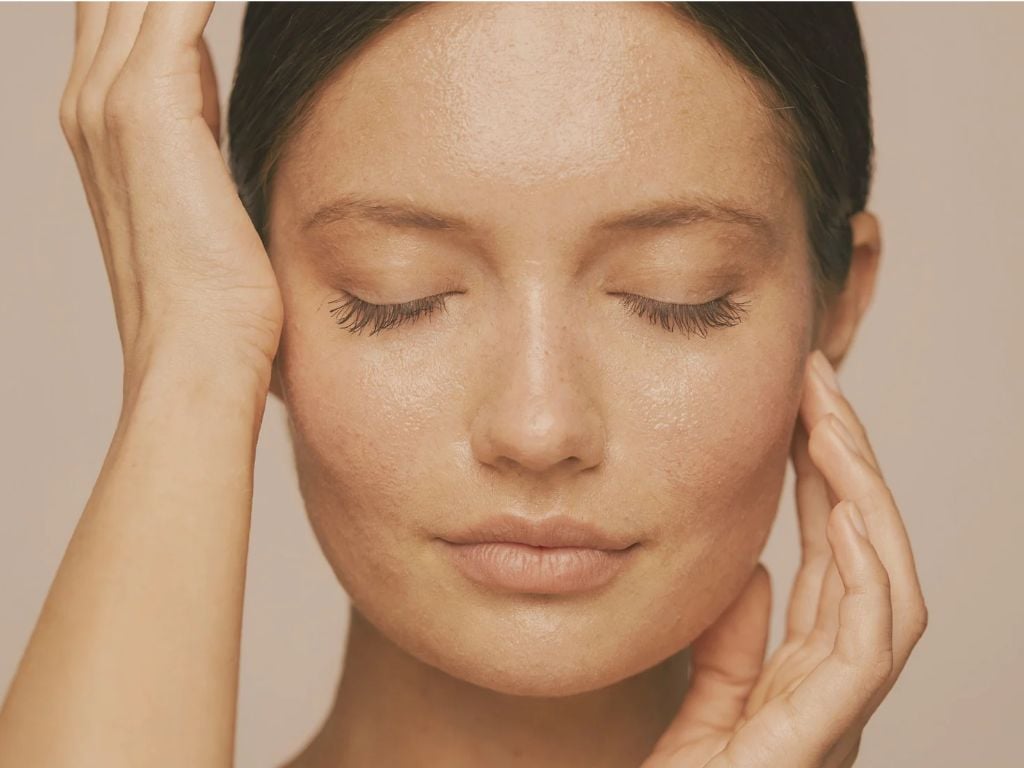
There is a less obvious reason why a complexion can look dull: the way light reflects off its surface. On relatively smooth skin, light is reflected more evenly. By contrast, tiny irregularities, surface cells that shed unevenly, and areas of discoloration affect that reflection, making the complexion appear less luminous.
Over time, the effects of photoaging become more apparent. Long-term exposure to ultraviolet radiation contributes to changes in collagen and elastic fibers and promotes the appearance of dark spots and fine lines. Meanwhile, scars left by earlier episodes of acne create small indentations that remain visible even when the skin is well hydrated.
Radiance, then, is not a single skin characteristic. It depends on hydration, surface smoothness, evenness of tone, and changes in collagen. These different factors explain why the same cream does not always produce the same result for two people whose skin looks dull.
Why Does Makeup Separate or Look Patchy?
Smooth skin does not have to be free of pores, fine lines, or natural variations in texture. Human skin has its own structure, which changes with age, environmental conditions, and everyday skincare. When its surface has dry flakes or rough areas, foundation tends to accentuate them rather than conceal them.
The formula of the foundation, how much is applied, its compatibility with skincare products, and the application technique also influence the finished look. Makeup that does not sit evenly on the skin is not, by itself, proof of a dermatological problem.
If roughness, flaking, or dullness remains noticeable on a clean face, however, switching products may not be enough. It is more useful to consider what the skin needs, without assuming that natural pores and lines ought to disappear.
How Can Skin Hydration and Texture Be Improved?
The first step is to distinguish between irregularities affecting the skin’s surface and deeper changes in its structure.
Skin that is peeling and irritated needs a different approach from skin with acne scars. Similarly, superficial discoloration does not necessarily require the same treatments as fine wrinkles or photoaging.
More frequent exfoliation is therefore not always the answer. When the skin barrier is impaired, restoring its function with appropriate skincare takes priority, along with treatment of any underlying dermatological condition where necessary.
The skin barrier is formed by the cells and lipids of the stratum corneum and helps limit water loss. When this protective function weakens, the skin becomes more vulnerable to irritation and may tolerate active ingredients less well.
Glycerin and hyaluronic acid in topical products help attract and retain moisture, while ceramides are essential components of the barrier’s lipid structure. Choosing a suitable formulation matters more than the sheer number or quantity of products used.
Excessive exfoliation does not necessarily speed up recovery. On the contrary, when skin is flaky or red, gentler care is generally a better starting point before considering more intensive resurfacing treatments.
Which Dermatological Treatments Can Improve Skin Radiance and Texture?
For persistent roughness, uneven skin tone, and certain signs of photoaging, aesthetic dermatology offers treatments that work at different depths. Some focus on renewing the surface, while more specialized techniques target collagen remodeling.
Chemical Peeling and HydraBeauty: When the Skin’s Surface Needs Renewal
When the complexion has lost its freshness and developed superficial roughness, controlled exfoliating treatments are among the available options. The aim is not to remove as many skin cells as possible, but to achieve appropriate renewal while respecting the condition of the skin.
Chemical Peeling involves applying specially formulated chemical solutions that produce controlled exfoliation at a selected depth. Depending on their composition and strength, peels are used to address roughness, certain pigmentation changes, superficial signs of photoaging, and fine wrinkles.
For example, glycolic acid belongs to the alpha hydroxy acid (AHA) family and is used in skin-renewal protocols. Salicylic acid, which is oil-soluble, is often selected for oily skin and comedonal acne. The right peel is chosen according to skin phototype, sensitivity, existing lesions, and the intended depth of action.
Not all chemical peels involve the same recovery period. Superficial treatments are usually gentler, whereas deeper peels require longer healing and more demanding aftercare.
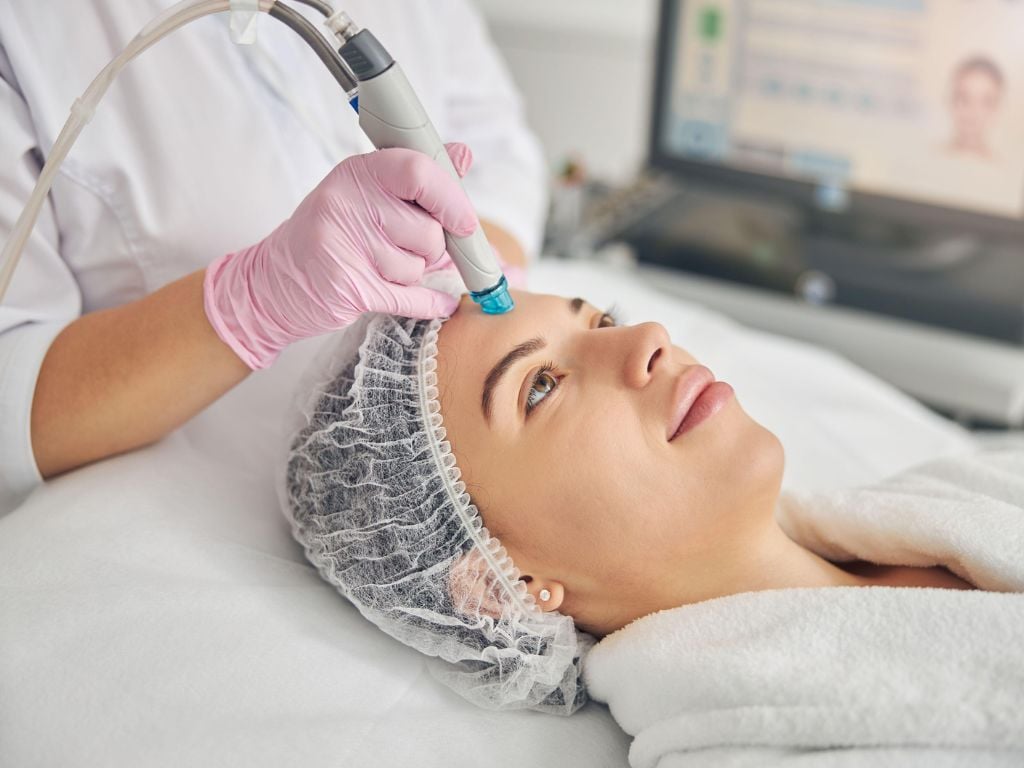
For people primarily interested in cleansing and caring for the skin’s surface, HydraBeauty offers a different option.
This hydrodermabrasion treatment combines cleansing, gentle exfoliation, and the application of hydrating serums. Its purpose is to remove surface impurities and accumulated sebum, leaving the skin feeling cleaner and smoother.
HydraBeauty is an option for people seeking deep cleansing, removal of superficial dead skin cells, and improved hydration. Chemical Peeling, on the other hand, offers different degrees of skin renewal depending on the acids used and the depth of application. Both treatments may form part of a skincare plan when the skin’s needs and condition allow it.
For a face with pronounced irritation or a disrupted skin barrier, immediate exfoliation is not always the best first choice. The condition of the complexion determines whether supportive care should come first.
Facial Mesotherapy and Skin Boosters: Hydration and Skin Quality
Deep wrinkles do not have to be present for a face to begin looking less fresh. In some cases, the changes mainly concern hydration, fine lines, and the overall appearance of the skin, without any major alteration in facial volume or contours.
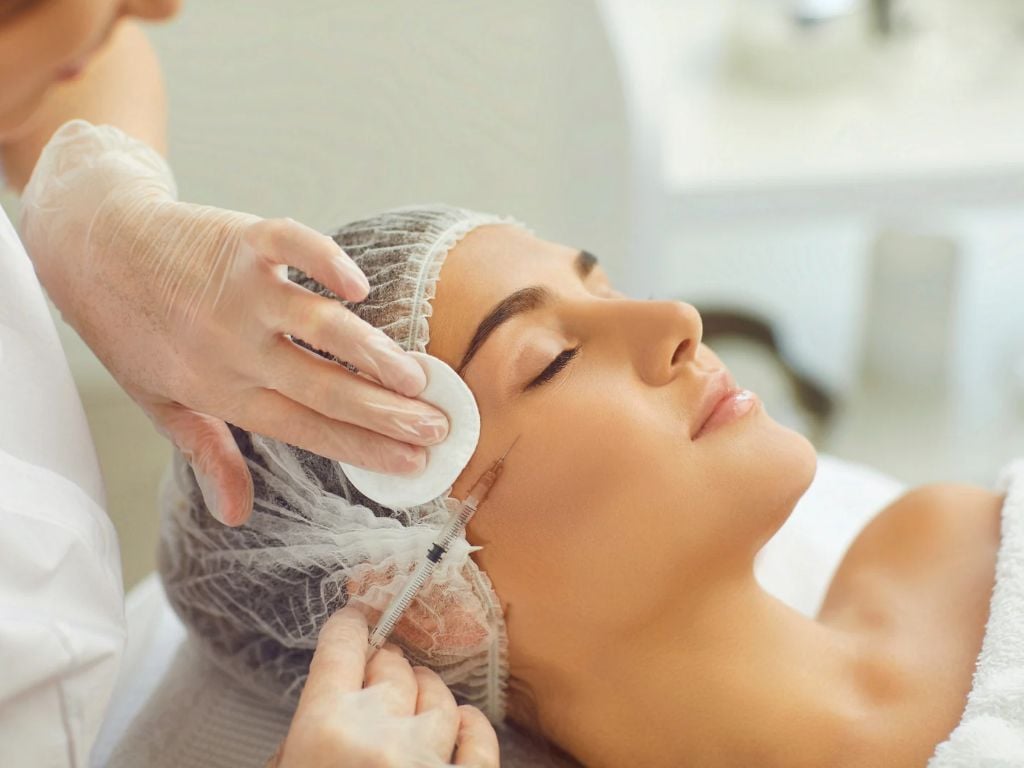
Facial Mesotherapy involves small injections of selected substances into the skin. Depending on the treatment protocol, the preparations used may contain hyaluronic acid or combinations of other active ingredients.
An important distinction is needed here: mesotherapy describes a method of administration rather than one specific product. Available formulations vary, as does the scientific evidence supporting their use. Assessment should therefore consider both the technique and the preparation being administered.
Skin Boosters also belong to the category of injectable treatments intended to improve skin quality. These products are often based on hyaluronic acid and are primarily used to enhance hydration and the appearance of the skin.
Unlike fillers, which are mainly selected to restore volume or reshape facial features, Skin Boosters have a different treatment objective. The composition, concentration, and administration method of each product influence the result.
Hyaluronic acid’s ability to bind water helps explain its role in injectable hydration treatments. Clinical studies have reported improvements in skin luminosity and hydration, offering another option for people seeking a fresher appearance without wanting to alter their natural facial features. The appropriate product and protocol are selected according to the skin’s condition.
Injectable treatments are not necessary for everyone with dehydrated facial skin. A lack of moisture at the surface can often improve with suitable skincare; deciding on an injectable procedure calls for a separate medical assessment.
Microneedling and Fractional Laser for Deeper Texture Irregularities
Skin with acne scars or pronounced irregularities has different needs from a face experiencing simple dryness. Small depressions and changes related to collagen loss are not usually corrected by surface skincare alone.
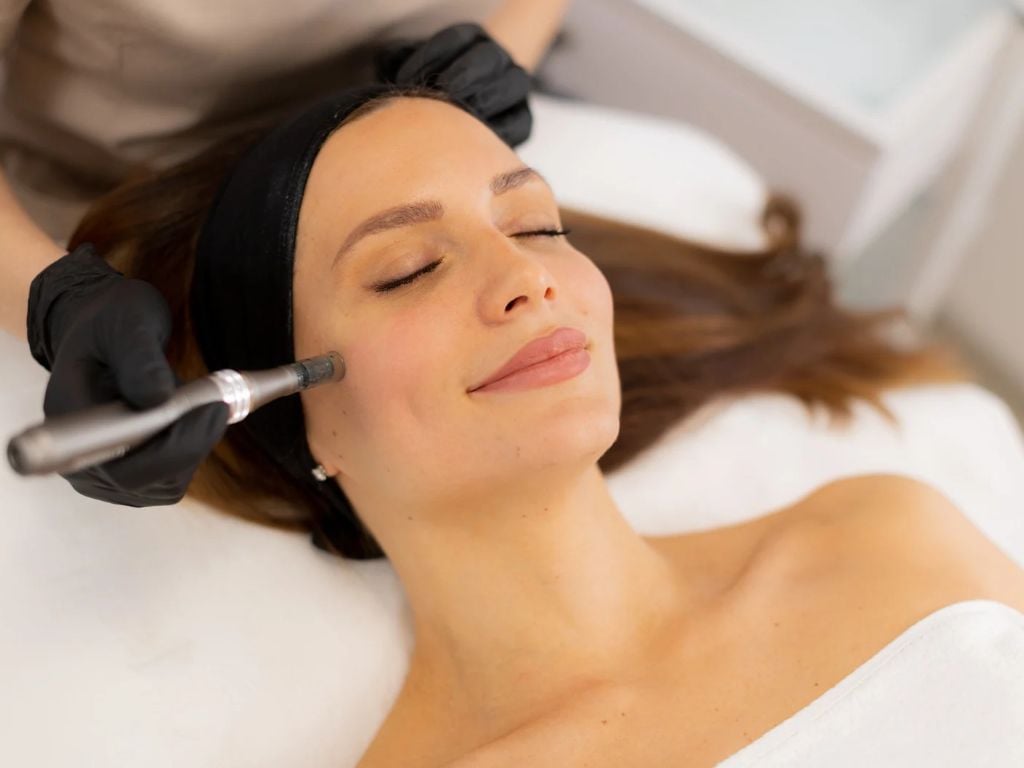
Microneedling uses a specialized device fitted with very fine needles to create controlled microchannels in the skin. The procedure stimulates healing mechanisms and collagen production, which gradually contribute to tissue remodeling.
The technique has been studied extensively for certain types of atrophic acne scars and is also used to improve fine wrinkles. Changes are not immediate, because collagen production and reorganization take time. Several sessions are often needed, depending on the extent of the skin concerns.
For more pronounced signs of photoaging and specific types of scarring, another available option is Fractional CO₂ Laser.
This technology creates microscopic zones of controlled ablation and thermal action while leaving areas of skin between them to support healing. The process stimulates tissue renewal and collagen remodeling, aiming to improve the appearance of scars, fine wrinkles, and changes caused by long-term sun exposure.
Unlike gentle surface-care treatments, Fractional CO₂ Laser requires a recovery period. Redness, swelling, and peeling are expected after the procedure, and particular attention must be paid to the risk of pigment changes, especially in darker skin phototypes.
The choice between Microneedling and Fractional Laser depends on the type and depth of the changes, skin phototype, medical history, and available recovery time. Some acne scars require a combination of techniques because not every scar type responds to the same treatment.
How Is the Right Treatment Chosen for Each Face?
Describing a complexion as “dull and tired-looking” is common, but that description alone is not enough to choose a treatment. The same appearance may reflect dehydration, pigmentation, photoaging, or a dermatological condition that needs to be addressed first.
A clinical examination allows the dermatologist to assess features that are not always easy to identify in the mirror: the condition of the skin barrier, signs of inflammation, the type of pigmentation, and the characteristics of any scars. Daily skincare habits, previous treatments, and medical history are also taken into account.
At Cosmetic Derma Medicine, Dr. Amalia Tsiatoura, Dermatologist–Venereologist and Scientific Director of the Dermatology and Laser Applications Department, has extensive experience in aesthetic dermatology and completed advanced training in laser applications at the University of Colorado Hospital in the United States. Her expertise highlights the importance of medical knowledge when selecting treatments suited to each person’s individual skin characteristics.
The clinical assessment can be complemented by the Skin Analyzer, a digital imaging system that records visible skin characteristics, including the appearance of pores, pigmentation, and signs of photoaging. These findings support, rather than replace, the clinical examination and may be used to monitor certain visible changes.
The most important consideration is to identify what the skin genuinely needs and what result can realistically be expected. Sometimes the best starting point is to adjust daily skincare; at other times, a targeted dermatological treatment may offer greater benefits.
Two people describing their complexion as “dull and tired” can have very different needs. A proper assessment helps determine which concerns may improve with everyday care and which may benefit from specialist treatment.
Daily Skincare for a Hydrated, Radiant Complexion
The health and appearance of the skin do not depend exclusively on treatments performed in a clinic. Gentle cleansing, regular moisturizing, and sun protection form the foundation of maintaining it in good condition.
Ingredients such as glycerin, ceramides, and hyaluronic acid in topical products contribute, through different mechanisms, to hydration and support of the skin barrier. Choosing the right formulation is more important than the number of products used each day.
Broad-spectrum sunscreen with SPF 30 or higher is especially important for preventing photoaging and limiting the worsening of certain pigmentation changes. After peeling, microneedling, or laser treatment, skincare should follow the treating doctor’s instructions and the skin’s healing needs.
Avoiding excessive exfoliation is equally important. When dry flakes appear on the face, the answer is not always another scrub or a stronger acid. Repeatedly stressing the skin’s surface may worsen irritation and make its texture even more uneven.
Consistency in a routine tends to be more helpful than constantly switching products. This is particularly true when using active ingredients for pigmentation, acne, or fine lines: the skin’s tolerance needs to be considered, and unnecessary combinations should be avoided.
Natural Radiance Begins With the Right Skin Care
Makeup that no longer sits as smoothly as it once did, or a complexion that looks dull, can be an opportunity to pay closer attention to the skin’s actual needs. Dehydration, pigmentation changes, and texture irregularities do not all have the same cause, and they do not require the same treatment.
Sometimes the best starting point is a meaningful adjustment to everyday skincare. In other cases, when concerns are more persistent or affect deeper structures, targeted dermatological treatments may be considered.
At Cosmetic Derma Medicine, you can book a dermatological consultation to learn about the options best suited to your skin’s individual characteristics.