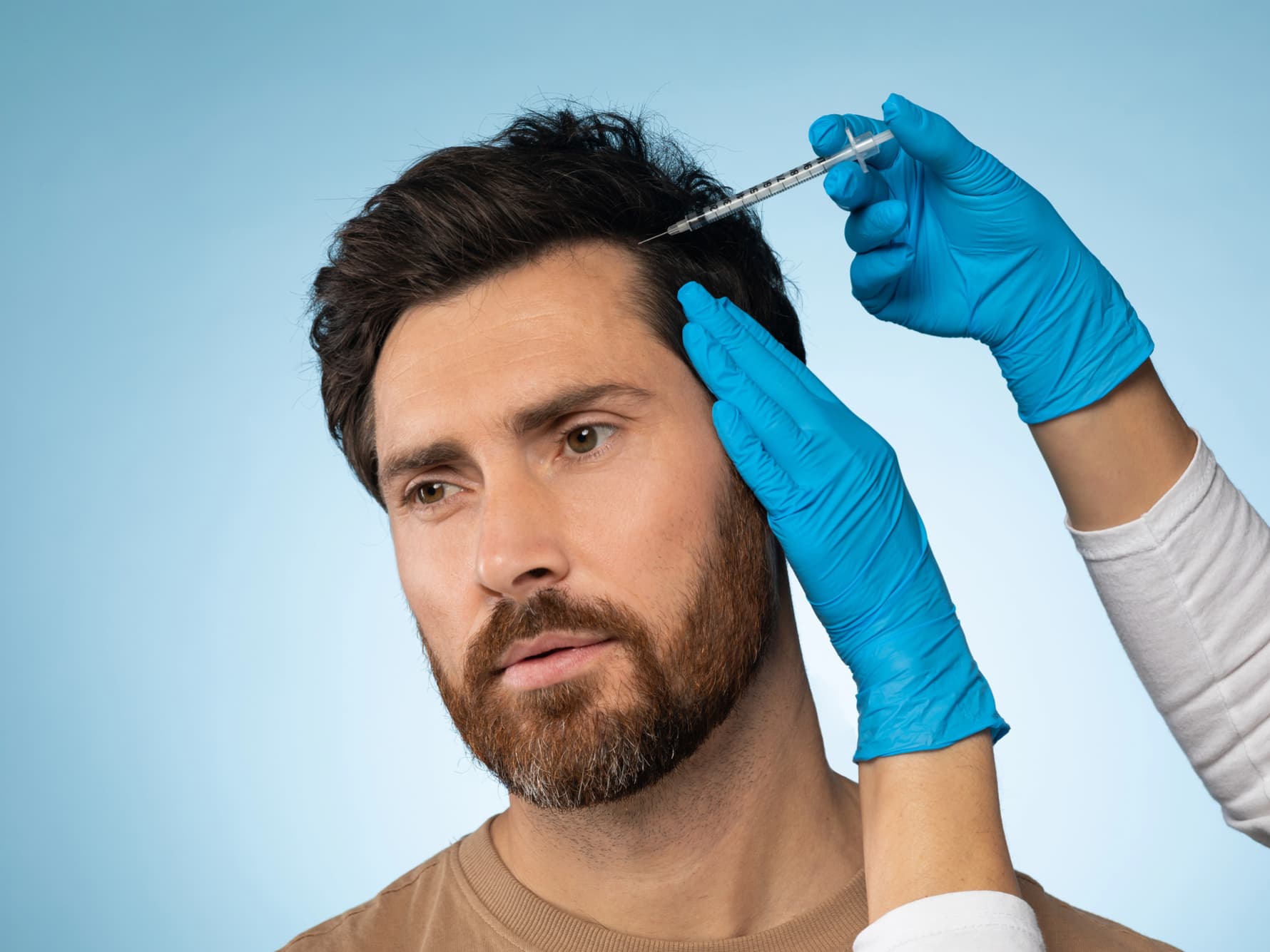
PRP treatment PRPfor hair loss has demonstrated high efficacy rates in suitable candidates; however, results are not the same for everyone [1] [2]. Even among individuals who meet the eligibility criteria, the response to treatment varies significantly. This variability is attributable to factors related both to the patient themselves and to the clinic and the protocol followed.
Patient-Related Factors
Since PRPis prepared from the patient’s own blood, its composition directly depends on the patient’s platelet count and platelet functionality. The platelet count in whole blood naturally varies by up to threefold among healthy individuals, resulting in the final PRP having a different growth factor concentration from patient to patient [1].
Even in the same patient, samples taken two weeks apart can differ by up to 40% in platelet concentration [2]. Factors such as diet, hydration, and stress levels in the period prior to the session influence this variation [4].
Age
Age affects both the number and functionality of platelets. According to the Rossi et al study, the platelet count in PRP decreases by approximately 32,000 per decade of life, with patients over 60 years of age consistently showing the lowest concentrations. At the same time, the biological response of hair follicles diminishes with age, as their metabolic activity slows down [1].
This does not exclude older patients from treatment, but the physician must adapt the application protocol to the patient’s clinical profile. Accordingly, the patient should have realistic expectations commensurate with their age.
Medical Conditions and Medication
Certain systemic conditions directly affect platelet function. Hypertension and coronary artery disease have been associated with a reduced platelet count, while thyroid disorders and iron-deficiency anaemia affect the hair growth cycle independently of PRP.
Equally important is the effect of medication. Non-steroidal anti-inflammatory drugs (NSAIDs) and certain antidepressants (SSRIs) reduce platelet functionality and, by extension, the effectiveness of the treatment. Disclosure of the patient’s complete medication regimen to the treating physician prior to commencing treatment is essential.
Lifestyle
Smoking reduces blood flow to the scalp and limits the tissue’s ability to utilise growth factors. Chronic stress maintains elevated cortisol levels, which disrupts the hair growth cycle. Patients who follow a balanced diet, maintain adequate hydration, and effectively manage stress tend to produce higher-quality PRP and respond better to treatment [4].
Stage of Hair Loss
As discussed in detail in our article on suitable candidates, PRPrequires active, functional hair follicles in order to be effective. In areas with a complete absence of follicles or established cicatricial alopecia, treatment does not reverse the condition. Initiating treatment at an early stage significantly increases the likelihood of a satisfactory response.
Clinic-Related Factors
Although PRP uses the patient’s own blood, the method of preparation and application varies considerably from clinic to clinic and directly affects the final outcome.
Centrifugation Protocol
Centrifugation — the step in which platelets are separated and concentrated — is not performed in the same way across all clinics. The speed, duration, and number of centrifugation cycles determine how many platelets will be isolated and whether they will remain intact and functional. Double-spin systems (double-spin) generally achieve higher concentrations compared to single-spin systems (single-spin) in patients who require a greater platelet yield [5].
The double-spin method is used in AGA when a higher concentration of platelets and growth factors is required, primarily in androgenetic alopecia of early to moderate stage III-VI, often as an adjunct to minoxidil and in standardised research or clinical practice protocols [5].
Insufficient mixing of the sample after centrifugation is also a common technical error that leads to non-uniform platelet distribution in the final product.
Injection Technique
The quality of the PRP alone will not be effective if the injection is not performed correctly. The depth, distribution, and volume per injection point, as well as the choice of technique (mesotherapy, nappage or a combination with micro-needling), determine how effectively the growth factors reach the hair follicles. The physician’s expertise in injection technique is equally decisive as the quality of the PRP.
Treatment Protocol
The number of sessions and the intervals between them are not arbitrary. Most protocols specify 4–6 sessions at 4–6 week intervals, so that each cycle of growth factors reinforces the previous one. Reducing the number of sessions or failing to individualise the protocol based on the patient’s response leads to suboptimal outcomes, even when the PRP produced is of high quality.
Timeline of Results
Reduction in hair loss and improvement in hair texture are typically noticed within the first few weeks, while visible density increase generally appears 2–3 months after commencing treatment. Some patients continue to see improvement for up to 6 months after the final session. Maintenance of results requires repeat maintenance sessions, typically every 6–12 months.
The Choice of Clinic Matters
Accurate diagnosis of the cause of hair loss, selection of suitable candidates, and application of treatment using scientifically validated protocols require experience, specialisation, and appropriate medical infrastructure. When treatment is carried out in an organised medical setting and in patients who meet the appropriate criteria, PRP delivers excellent results in the management of hair loss.
References
- Gentile P, et al. The Effect of Platelet-Rich Plasma in Hair Regrowth: A Randomized Placebo-Controlled Trial. Stem Cells Translational Medicine. 2015;4(11):1317-23. doi:10.5966/sctm.2015-0107
- Jimenez F. Platelet Rich Plasma (PRP) in Patients with Androgenetic Alopecia (AGA): Does It Work? Hair Transplant Forum International. 2014;24(1):5-6. doi:10.33589/24.1.0005
- Rossi L, et al. Substantial Variability in Platelet-Rich Plasma Composition Is Based on Patient Age and Baseline Platelet Count. Plastic and Reconstructive Surgery Global Open. 2023. https://doi.org/10.1016/S2666-061X(23)00074-3
- Paichitrojjana A, Paichitrojjana A. Platelet Rich Plasma and Its Use in Hair Regrowth: A Review. Drug Design, Development and Therapy. 2022;16:635-645. doi:10.2147/DDDT.S356858 5. Pourmokhtar M, et al. Comparative Study of Four Platelet-Rich Plasma Methods for Preparing Platelet Concentrates. Iranian Journal of Blood and Cancer. 2013. https://ijbc.ir/article-1-456-en.pdf