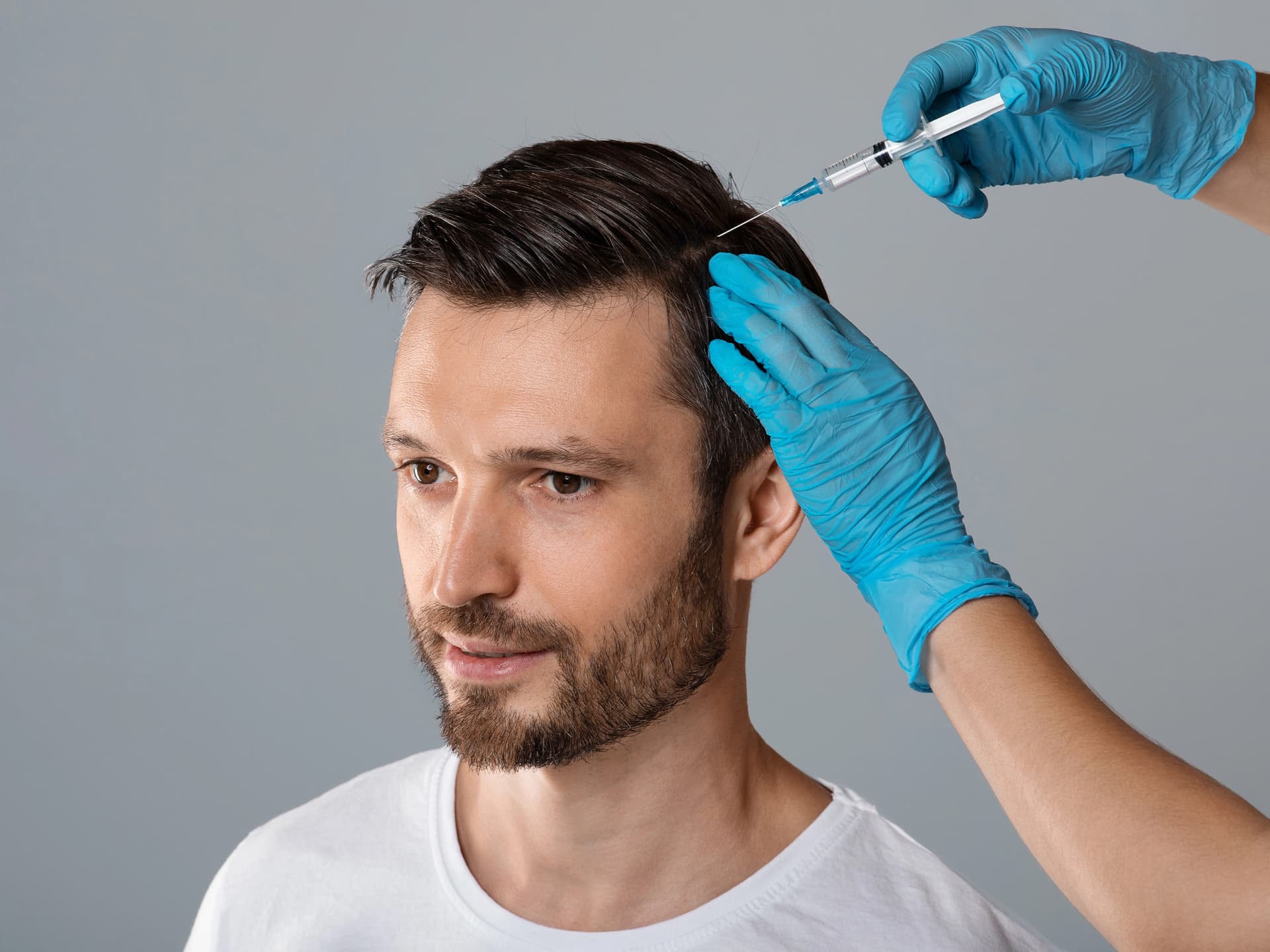
PRP for androgenetic alopecia has been extensively studied over the past two decades, with hundreds of clinical trials, systematic reviews, and meta-analyses confirming its efficacy. This body of evidence has established PRP as one of the most scientifically validated options in the non-surgical management of hair loss, with a clearly defined mechanism of action, a well-documented safety profile, and measurable clinical outcomes.
1. How the Growth Factors in PRP Work
PRP (Platelet-Rich Plasma) is an autologous regenerative therapy that utilises the patient’s own platelets to treat hair loss. Androgenetic alopecia is characterised by the progressive miniaturisation of hair follicles, resulting in increasingly thin and sparse hair. This process is interrupted by the growth factors contained within the platelets, which stimulate the regenerative mechanisms of the hair follicles.
The treatment begins with blood collection and centrifugation to isolate the plasma, which typically contains 5 to 7 times the platelet concentration found in normal blood. The resulting concentrate is then injected directly into the scalp at areas of thinning. For optimal regenerative effect, a platelet concentration of approximately 1,000,000 platelets/μL is required. [2]
At a cellular level, PRP activates two key signalling pathways: ERK and Akt. The ERK pathway regulates cell proliferation, while Akt prevents hair follicle cell death by upregulating the Bcl-2 protein, thereby protecting cells from oxidative stress. Furthermore, the activation of the Wnt/β-catenin signalling pathway induces the differentiation of stem cells into new hair cells. [4]
Table 1: The Impact of Growth Factors on Hair Follicles [1][3]
| Growth Factor |
Mechanism of Action |
Impact on Hair Follicle |
|
PDGF |
Stimulation of mesenchymal cells & angiogenesis |
Activation of the anagen phase & proliferation of the dermal papilla |
|
VEGF |
Interaction with VEGFR-2 receptor and ERK pathway |
Improvement of microcirculation & nutrient supply |
|
IGF-1 |
Enhancement of epithelial cell proliferation |
Prolongation of the anagen phase & inhibition of apoptosis |
|
EGF |
Regulation of hair cell differentiation |
Improvement of hair shaft diameter & acceleration of regeneration |
|
TGF-β |
Stimulation of extracellular matrix synthesis |
Enhancement of structural integrity of hair follicles & regulation of the hair cycle |
The clinical efficacy of PRP is grounded in the activation of the ERK and Akt signalling pathways. The ERK pathway stimulates cell proliferation, while Akt activation exerts a potent anti-apoptotic effect, ensuring the survival of hair follicle cells. Specifically, by upregulating Bcl-2 protein levels, PRP shields dermal papilla cells against apoptosis induced by oxidative stress. Moreover, the activation of the Wnt/β-catenin pathway stimulates stem cell differentiation, triggering the transition of hair follicles from the telogen to the anagen phase. [4]
PRP contains 2 to 7 times the platelet concentration of normal blood, with a concentration of approximately 1,000,000 platelets/μL considered the “gold standard” for optimal regenerative effect. [3]
2. When PRP Delivers Optimal Results
The efficacy of PRP is not universal, but depends on appropriate patient selection. Analysis of the research data demonstrates that the treatment is most effective when applied to individuals with active hair follicles undergoing miniaturisation, rather than to areas with established cicatricial alopecia or complete absence of follicles.
Hair transplantation remains the only solution for areas with total hair loss. PRP is used as an adjunct therapy to enhance graft survival and accelerate healing of the donor area.
In men, the Hamilton-Norwood scale is the primary assessment tool. Stages II to IV are considered the most ideal for PRP treatment. [1] In more advanced stages V–VII, PRP is used as an adjunct to hair transplantation.
Table 2: Candidate Suitability and Expected Response
| Patient Category |
Stage of Alopecia |
Likelihood of Success |
|
Men (Early-stage AGA) |
Hamilton-Norwood II-III |
Very High (mean increase of 45.9 hairs/cm²) [5] |
|
Men (Moderate AGA) |
Hamilton-Norwood IV |
High (Stabilisation & Densification) |
|
Women (Diffuse Thinning) |
Ludwig I-II |
Excellent (Volume Improvement) [6] |
|
Advanced Alopecia |
Hamilton-Norwood V-VII |
Adjunct to hair transplantation |
The age group of 24–45 years is considered the most suitable, as patients in this range possess high regenerative capacity. [7] Limiting factors include smoking (which causes vasoconstriction), systemic inflammatory diseases, and hormonal disorders (e.g. PCOS, thyroid dysfunction). [8]
3. The Treatment Session Procedure
The total duration of a session ranges from 45 to 60 minutes and comprises the following stages:
- Blood Collection: Venous blood is drawn in a volume of 10–60 ml, determined by the extent of the area to be treated.
- Centrifugation: Separation of the blood’s formed elements to isolate the platelet-rich plasma from red blood cells.
- Injection: Multiple intradermal microinjections (mesotherapy technique) are performed in the thinning areas using very fine-gauge needles (30G or 32G).
4. Number of Sessions and Duration of Results
Maximising the therapeutic benefit requires adherence to a structured treatment protocol:
- Initial Phase (Loading Phase): Comprises 3 to 6 sessions, with an interval of 4–6 weeks between applications.
- Sex Differences: Due to the often more aggressive progression of androgenetic alopecia in men, 4–6 initial sessions are typically required. In contrast, women frequently show faster improvement in hair shaft diameter, which translates clinically as increased hair volume, often as early as the 3rd session [3][9].
- Maintenance: The duration of results ranges from 12 to 18 months. To maintain density, one booster session every 6–12 months is recommended.
Improvement Timeline:
Hair growth improvement following PRP treatment progresses gradually, mirroring the natural transition of hair follicles into the anagen phase:
- 2–4 Weeks: A reduction in daily hair shedding and improvement in scalp texture are observed. [3][4][9]
- 3–4 Months: New hair growth and an increase in hair shaft diameter become objectively apparent at this stage [4,5,9]. The study by Gentile et al. (2015) recorded a statistically significant increase in density (+27.7 hairs/cm²) at exactly 3 months [5].
- 6–12 Months: Achieving maximum density and full aesthetic restoration requires this timeframe, as newly formed hair shafts need time to mature [1,4,11].
5. Efficacy Assessment
The use of PRP in the management of alopecia represents a scientifically validated clinical practice. A systematic review of 12 clinical trials demonstrated that 84% of studies reported positive clinical outcomes, with 50% of these showing statistically significant improvement in hair density and shaft diameter [10].
Of particular interest are recent data from a comparative study evaluating PRP as an adjunctive therapy to oral finasteride. The results demonstrated that the combination of PRP and Finasteride significantly outperforms the traditional combination of Minoxidil (5%) and Finasteride, achieving superior final hair density. [11]
Table 3: Efficacy of PRP in Combination with Pharmacological Agents
| Treatment Regimen |
Final Hair Density |
| PRP + Finasteride (1mg) |
101.6 hairs/cm² |
| Minoxidil (5%) + Finasteride (1mg) |
87.0 hairs/cm² |
The study highlights the high efficacy of PRP in acting synergistically with pharmacological therapy, delivering a density gain exceeding 100 hairs per square centimetre — a result considered exceptional for a non-surgical method. [11] Furthermore, PRP has been shown to be effective in cases where patients do not respond adequately to conventional treatments.
Safety Profile and Advantages Over Pharmacological Therapy
One of the most significant advantages of PRP over conventional pharmacological therapies (finasteride, minoxidil) is its excellent safety profile. As an autologous therapy, PRP eliminates the risk of allergic reactions or rejection, and is devoid of the systemic side effects that frequently lead patients to discontinue pharmacological treatment [3].
Specifically:
- Versus Finasteride: PRP does not affect hormone levels and is not associated with sexual dysfunction, making it the preferred option for men concerned about the side effects of 5α-reductase inhibitors [1].
- Versus Minoxidil: Local irritation, dry scalp, and hypertrichosis in unintended areas (in cases of overdosage in women) are avoided, and there is no requirement for the daily, demanding application of topical preparations [10].
6. Pre-Treatment Guidelines
The efficacy of PRP therapy is directly dependent on maintaining the functional integrity of the platelets. To maximise the release of growth factors, strict adherence to the following guidelines is required:
- 10 Days Before the Session: Complete cessation of acetylsalicylic acid (aspirin) and non-steroidal anti-inflammatory drugs (NSAIDs), such as ibuprofen, naproxen, diclofenac, nimesulide, and others, as these inhibit platelet function [4]. The use of paracetamol is permitted, as it does not exert significant anti-inflammatory activity.
- 7 Days Before the Session: Discontinuation of dietary supplements with anticoagulant properties (e.g. vitamin E, omega-3 fatty acids, Ginkgo biloba, garlic), to avoid bruising at the injection sites.
- 72 Hours Before the Session: Avoidance of alcohol consumption and cessation of smoking is recommended, as oxidative stress negatively affects the biological activity of growth factors [9].
- 24 Hours Before the Session: Adequate hydration (consumption of at least 2 litres of water) to facilitate blood collection and ensure a satisfactory plasma volume.
- Day of the Session: Thorough cleansing of the scalp without the use of styling products, to minimise the risk of infection. A light meal 2–3 hours prior to the procedure is recommended to prevent hypoglycaemic episodes during blood collection.
7. Post-Treatment Guidelines
could disrupt the biological sequence of healing:
- First 24 Hours: Washing of the scalp and contact with the injection sites should be avoided to maintain asepsis and prevent secondary infection.
- First 48–72 Hours: Avoidance of intense physical exercise, sweating, sauna, and direct sun exposure. Elevated temperature and perspiration may exacerbate local oedema and cause irritation at the needle entry points.
- First 3 Days: Avoidance of heat styling tools (hair dryers), chemical treatments (dyes), and styling products, so as not to disrupt the superficial skin barrier, which is in a phase of regeneration.
- First 7 Days: Continued abstention from non-steroidal anti-inflammatory drugs (NSAIDs). The use of anti-inflammatory agents at this stage may suppress the therapeutic action of PRP. The initial, controlled inflammation triggered by platelet degranulation is essential for the release of growth factors [1][3].
8. Side Effects and Safety
PRP therapy is characterised by a high safety index, with adverse events described in the literature as mild, localised, and fully reversible.
- Autologous Nature and Systemic Safety: As a 100% autologous method, PRP carries no risk of allergic reactions, immunological rejection, or systemic side effects. Unlike pharmacological therapies, it does not affect hormonal balance or the function of vital organs [11].
- Local Reactions: The most common side effects are confined to the injection sites and include mild pain (discomfort), oedema, erythema, or a transient sensation of mild tightness. These symptoms constitute part of the expected inflammatory response and subside within 24–48 hours.
- Transient Shedding Phenomenon: A temporary increase in the rate of hair loss may be observed following the initial sessions. This phenomenon represents a normal biological response of the body, as the activation of the anagen phase triggers the early shedding of hairs already in the telogen phase, to be replaced by new, healthy hairs [9].
9. Practical Advice for Patients
An extensive review of the literature demonstrates that PRP therapy represents a safe, effective, and scientifically validated approach for the management of androgenetic alopecia. The clinical success of the method is directly related to the correct application of the protocol and patient compliance.
What patients should consider before deciding on treatment:
- Expectation Management: PRP acts effectively in reversing the miniaturisation of existing hair follicles, increasing hair density and shaft diameter. However, its efficacy is limited in areas with complete follicular atrophy (cicatricial alopecia or advanced-stage alopecia).
- Treatment Timeline: The biological process of regeneration requires patience. While a reduction in shedding is observed within 2–4 weeks, an objective increase in hair mass becomes visible after 3–6 months.
- Adherence to the Treatment Protocol: Completion of the initial phase (3–6 sessions) is essential to ensure maximum follicular stimulation and stabilisation of results.
- Combination Therapies: PRP yields optimal results when combined with pharmacological agents (finasteride, minoxidil) or as a supportive therapy before and after hair transplantation to enhance graft survival [11].
- Safety: The autologous nature of the method makes it an ideal choice for patients with contraindications or sensitivity to systemic pharmacological therapies.
Choosing a Clinic
The choice of an appropriate clinic is of paramount importance, as the success of PRP treatment depends greatly on the individual needs of the patient, the expertise and experience of the physician, the equipment available, and the selection of the appropriate protocol, which differs from patient to patient.
PRP therapy is not a simple “standardised” injection, but a complex medical procedure in which many different factors determine the final outcome. In Greece, the clinics Advanced Hair Clinics and Cosmetic Derma Medicine have specialised physicians across all their locations, under the supervision of Dr Anastasios Vekris and Dr Amalia Tsiаtoura, in the treatment of hair loss with PRP, with an extensive portfolio of photographs and videos from cases documenting the safety and exceptionally high efficacy of the treatment.
References
This article was reviewed by Dr. Anastasios Vekris, Scientific Director of Advanced Hair Clinics, and Dr. Amalia Tsiatoura, Scientific Director of Cosmetic Derma Medicine, on March 2, 2026.
- Sharma A, Chouhan K, Bhatia S, Dashore S. Platelet-Rich Plasma in Androgenetic Alopecia. Indian Dermatol Online J. 2021 Nov 25;12(Suppl 1):S31-S40. doi: 10.4103/idoj.idoj_328_21.
- Marx RE. Platelet-rich plasma: evidence to support its use. J Oral Maxillofac Surg. 2004 Apr;62(4):489-96. doi: 10.1016/j.joms.2003.12.003. PMID: 15085519.
- Stevens J, Khetarpal S. Platelet-rich plasma for androgenetic alopecia: A review of the literature and proposed treatment protocol. Int J Womens Dermatol. 2018 Sep 21;5(1):46-51. doi: 10.1016/j.ijwd.2018.08.004.
- Ferrando J, García-García SC, González-de-Cossío AC, Bou L, Navarra E. A Proposal of an Effective Platelet-rich Plasma Protocol for the Treatment of Androgenetic Alopecia. Int J Trichology. 2017 Oct-Dec;9(4):165-170. https://pmc.ncbi.nlm.nih.gov/articles/PMC5655625/.
- Gentile P, Garcovich S, Bielli A, Scioli MG, Orlandi A, Cervelli V. The Effect of Platelet-Rich Plasma in Hair Regrowth: A Randomized Placebo-Controlled Trial. Stem Cells Transl Med. 2015. doi: 10.5966/sctm.2015-0107.
- Jing Yuan, Yimin He, Hui Wan, Ying Gao, Effectiveness of platelet-rich plasma in treating female hair loss: A systematic review and meta-analysis of randomized controlled trials, 2024, https://doi.org/10.1111/srt.70004
- Steward EN, Patel H, Pandya H, Dewan H, Bhavsar B, Shah U, Dholakia K. Efficacy of Platelet-Rich Plasma and Concentrated Growth Factor in Treating Androgenetic Alopecia – A Retrospective Study. Ann Maxillofac Surg. 2020. https://pmc.ncbi.nlm.nih.gov/articles/PMC7943983/
- Romitti M, Fabris VC, Ziegelmann PK, Maia AL, Spritzer PM. Association between PCOS and autoimmune thyroid disease: a systematic review and meta-analysis. Endocr Connect, 2018, https://pubmed.ncbi.nlm.nih.gov/30352422/
- Paichitrojjana A, Paichitrojjana A. Platelet Rich Plasma and Its Use in Hair Regrowth: A Review. Drug Des Devel Ther. 2022 Mar. https://pmc.ncbi.nlm.nih.gov/articles/PMC8922312/
- Gentile P, Garcovich S. Systematic Review of Platelet-Rich Plasma Use in Androgenetic Alopecia Compared with Minoxidil®, Finasteride®, and Adult Stem Cell-Based Therapy. Int J Mol Sci. 2020. doi: 10.3390/ijms21082702.
- Evaluation of Platelet-Rich Plasma (PRP) Versus Topical Minoxidil (5%) in Combination with Oral Finasteride for the Treatment of Androgenic Alopecia. Pakistan Journal of Health Sciences. 2024. doi: https://doi.org/10.54393/pjhs.v5i08.1666