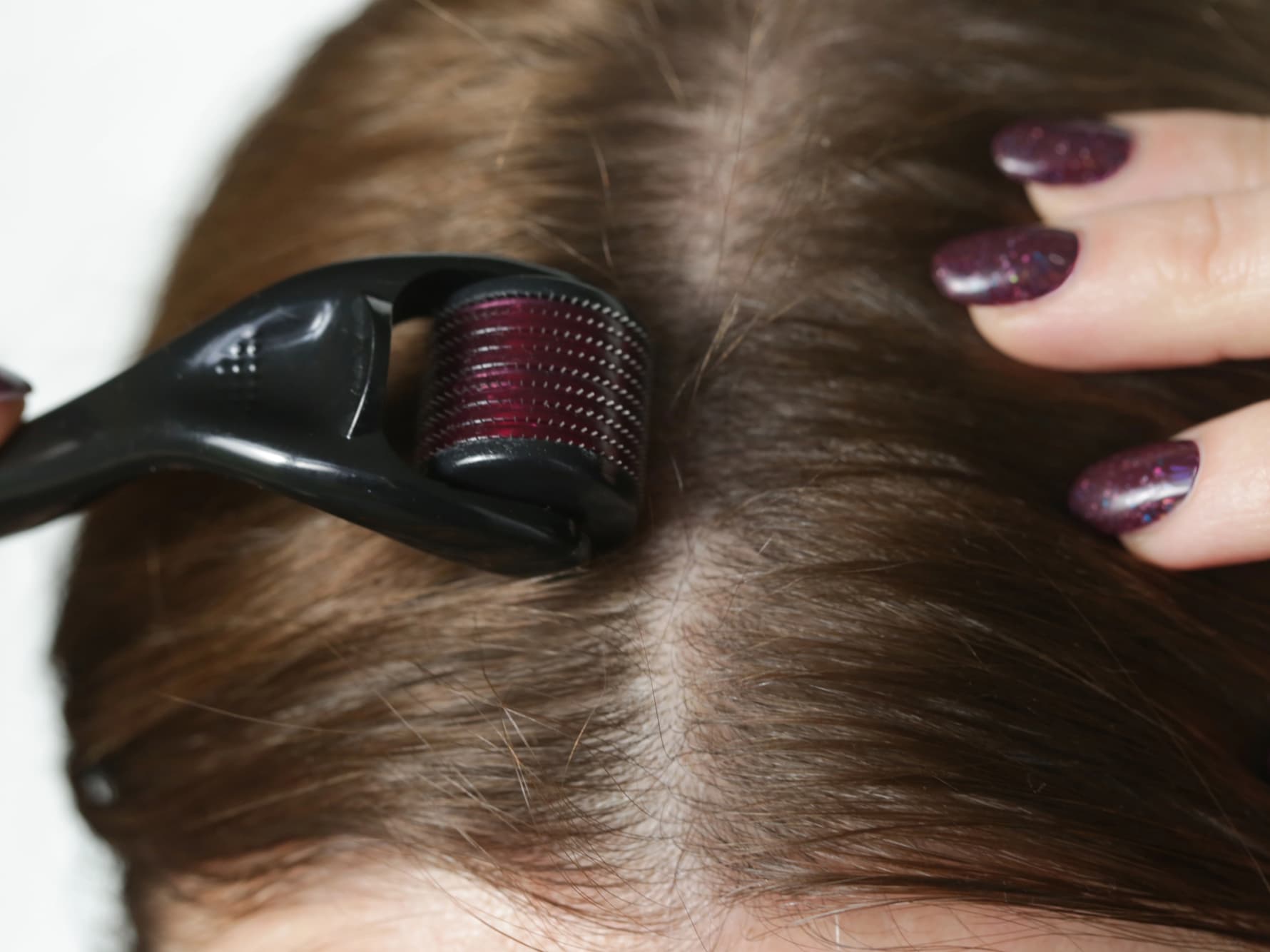
The microneedling is a particularly popular treatment for hair loss, with proven effectiveness in promoting hair growth. The treatment can be performed both at home and in a medical setting, with certain differences in application method and efficacy.
Although it was initially developed for facial skin rejuvenation, it subsequently became established as a primary treatment in hair restoration, owing to its ability to stimulate follicular regeneration and enhance the absorption of topical pharmaceutical agents.
What It Is
Microneedling is a handheld device with a handle that terminates in a roller covered with very fine microneedles. When rolled over the skin or scalp, it creates micro-injuries that activate the body’s natural self-healing process. Through this process, it stimulates the production of collagen and elastin, enhances blood circulation, and awakens the restoration mechanism of dormant hair follicles.
Microneedling for Hair
A general observation in clinical practice is that the efficacy of microneedling increases significantly when combined with topical therapeutic agents.
As reported by the International Journal of Trichology, microneedling in combination with minoxidil significantly increases hair count in men with androgenetic alopecia compared to minoxidil alone.
Furthermore, the combination of microneedling with PRP with PRP yields excellent results in as few as four sessions, as reported by the Journal of Cutaneous and Aesthetic Surgery.
The micro-injuries created by microneedling stimulate the production of growth factors and activate follicular stem cells, leading to greater hair density and regeneration.
Clinical studies indicate that consistent use of microneedling over several months improves hair texture and strengthens hair strands. Several patients notice an increase in hair shaft thickness prior to regrowth.
Microneedling for Beard Growth
Although most scientific research focuses on scalp hair, several studies demonstrate that microneedling enhances beard growth. The mechanism of action is analogous to that on the scalp — microneedling increases blood circulation, stimulates follicular regeneration, and leads to denser and stronger beard hair.
When Are Results Visible
Results in hair density following consistent microneedling use are visible after 2 to 4 months. However, individual results vary depending on factors such as the severity of hair loss, frequency and method of use, as well as proper post-treatment care.
Patients who use microneedling in combination with topical treatments such as minoxidil exhibit hair regrowth within a shorter timeframe.
How It Works
Microneedling operates through various biological mechanisms:
- It activates the release of growth factors such as Platelet-Derived Growth Factor (PDGF) and Transforming Growth Factor-beta (TGF-β), which contribute to follicular regeneration.
- It activates stem cells by stimulating dermal papilla cells, which are essential for the hair growth cycle.
- It enhances blood flow, increasing the supply of nutrients and oxygen to the hair follicles.
- It increases the efficacy of hair growth medications and products by facilitating deeper penetration into the scalp.
Indications
The microneedling is indicated for individuals experiencing various types of hair loss, including:
- Androgenetic alopecia (male and female pattern baldness)
- Alopecia areata (autoimmune hair loss)
- Telogen effluvium (temporary hair shedding due to seasonal changes, stress, or illness)
Contraindications
It is essential to consult a dermatologist before initiating treatment. microneedling may exacerbate various pre-existing medical conditions in the treatment area, including active scalp infections, chronic skin conditions such as eczema, psoriasis, active-phase rosacea, and a history of keloid scarring. Furthermore, it is contraindicated in patients with open wounds, diabetes mellitus, coagulation disorders or anticoagulant therapy, and autoimmune disorders.
How to Use It Correctly
Scalp or Beard Preparation
- Wash the hair and scalp or beard with a mild shampoo to remove dirt and sebaceous matter.
- Disinfect the microneedling roller with 70% isopropyl alcohol for at least 10 minutes prior to use.
Performing the Procedure
- Gently roll the device over the scalp in multiple directions — vertically, horizontally, and diagonally.
- Apply minimal pressure to avoid excessive discomfort or skin damage.
- The treatment should last approximately 5–10 minutes.
Post-Treatment Care
- Apply a soothing serum or topical treatment (e.g. minoxidil) as recommended by a dermatologist.
- Avoid sun exposure.
- Use only gentle, chemical-free hair products for at least 24 hours.
Which Needle Size to Use
Needle size determines the depth of penetration and efficacy:
- 0.25mm – 0.5mm: Enhances absorption of topical products.
- 0.5mm – 1.0mm: Stimulates follicular activity.
- 1.0mm – 1.5mm: Generally used in a clinical setting with specialized equipment and settings for more intensive treatments.
For hair regeneration at home, needles of 0.5 mm to 1.0 mm are recommended.
How Often to Use It
- 0.5mm Needles: Once per week.
- 1.0mm Needles: Every 2–4 weeks to allow proper wound healing.
Overuse may cause irritation; therefore, adherence to these guidelines is important. We recommend that the first treatment with microneedling be performed in a medical setting.
At our Clinic, we will recommend a medically certified microneedling device tailored to your specific case, along with usage instructions, to help you achieve optimal results and avoid potential complications.
What Are the Side Effects
Although microneedling is generally a safe treatment, certain side effects may include:
- Erythema and oedema which are typically transient and resolve within a few hours or, at most, one to two days.
- Mild discomfort during the procedure.
- Risk of infection if the device is not properly sterilised.
To avoid complications, always disinfect the microneedling device and follow post-treatment instructions.
The Risks of microneedling at home
Although at-home microneedling is widely practised, it carries serious risks if not performed correctly. Improper technique, excessive pressure, or lack of sterilisation can lead to infections, prolonged irritation, or even scarring.
Furthermore, excessively large needles used without medical guidance may damage the cutaneous barrier and cause trauma to the scalp. If you experience persistent erythema, pain, or infection, it is important to contact your physician immediately.
Device microneedling at Home or Clinical microneedling;
- At-Home Microneedling: More affordable and convenient, but requires strict hygiene and proper technique.
- Clinical microneedling: Performed in a medical setting, ensuring optimal results with technologically advanced specialised devices in a sterile environment.
If your hair loss is severe, applying microneedling in a clinical setting will offer considerably more benefits, including faster hair recovery, safety, and superior outcomes.
Alternative Treatments
If you are hesitant to try microneedling, there are other effective alternative treatments:
Tricopat
The Tricopat is the most advanced regenerative hair loss treatment combining microneedling and iontophoresis. It is intended for women and men with mild forms of alopecia. It utilises natural growth factors and bioactive substances found in nature to activate and regenerate hair growth.
Pharmacological and Autologous Therapies
- Minoxidil, finasteride and other oral or topical medications that help slow hair loss and promote regeneration.
- Platelet-Rich Plasma (PRP), which involves the injection of concentrated platelets derived from the patient’s own blood into the scalp, to strengthen hair follicles and promote hair regeneration.
Surgical Intervention
- Hair transplantation, a permanent solution for significant hair loss, involving the transfer of healthy follicular units to areas of thinning.
Why Choose Us
If you are experiencing hair loss and seeking an effective solution, our clinic offers personalised treatment plans tailored even to the most challenging cases. Book an appointment today and take the first step towards restoring your hair. Call from Greece at (+30) 210 6980451 and from Cyprus at (+357) 25251040, or leave your message below and we will respond as soon as possible.